


 +34 912 901 222
 +34 637 240 402

Aging is not just about getting older. Over time, the processes that allow our cells to produce energy, maintain their function, and recover from exertion also change.
In this context, there is a molecule that is sparking growing interest in longevity research: NAD+ (nicotinamide adenine dinucleotide).
A new study published in GeroScience has found a possible link between NAD+ levels in the blood and frailty in older adults.
The finding raises an interesting question: what is the relationship between our cells' energy and our ability to stay active and strong as we age?
What is NAD+ and what is it used for?
NAD+ is a coenzyme present in virtually every cell in our body.
Although its name may sound complicated, its function is easy to understand: it is involved in the processes that convert nutrients into energy.
To understand it better, think of mitochondria, small structures that act as the powerhouses of our cells.
NAD+ is involved in the processes that allow these structures to produce the energy our body needs to function properly.
But its role goes beyond that. It is also involved in mechanisms related to cell maintenance and stress response.
This is why studying NAD+ is particularly interesting when we talk about healthy aging, cellular energy, and longevity.
NAD+ and frailty: what has the new study discovered?
Researchers analyzed the blood NAD+ levels of 529 Japanese adults over 65 years old.
Their goal was to see if there was any link between the concentration of this molecule and physical frailty.
The results showed that people who were frail had, on average, lower NAD+ levels in their blood.
Specifically, the NAD+ concentration was 24.0 µmol/L in people with frailty, compared to 25.0 µmol/L in those without this condition.
Although the difference may seem small, the researchers found an association in one of their analyses between a higher NAD+ concentration and a lower likelihood of presenting frailty.
These results suggest that NAD+ metabolism may be related to certain physical changes that occur during aging.
However, we still do not know whether lower NAD+ levels directly contribute to frailty or whether both are the result of other age-related changes.
What is frailty and how does it affect aging?
When we talk about frailty, we are not simply referring to feeling tired or having less strength than before.
In medicine, frailty describes a condition in which the body loses some of its ability to handle exertion, recover, and adapt to stressful situations.
It may manifest as reduced muscle strength, limited mobility, exhaustion, or greater difficulty recovering from illness.
And this is where one of the major goals of longevity comes in: it is not just about living more years, but about maintaining our independence, mobility, and quality of life for as long as possible.
This is why it is so important to research which cellular processes may be related to preserving our physical abilities.
NAD+ and cellular aging: what is the relationship?
As we age, our body undergoes changes that can affect energy metabolism and mitochondrial function.
NAD+ plays an important role in energy metabolism and mitochondrial function, two processes that are being investigated for their relationship with cellular aging and longevity.
The new study provides another clue by finding an association between blood NAD+ levels and physical frailty.
But there is an important caveat.
When researchers accounted for certain blood components, such as hematocrit, the observed relationship weakened and was no longer statistically conclusive.
This means that it is still too early to consider blood NAD+ a reliable indicator of frailty.
In addition, the study analyzed participants at a single point in time, so it does not allow researchers to determine which comes first or establish a cause-and-effect relationship.
Further research will be necessary, especially in tissues such as muscle, to better understand this connection between NAD+, mitochondrial health, and healthy aging.
Can increasing NAD+ levels prevent frailty?
This is one of the most interesting questions, but also one that must be answered with the greatest caution.
The study does not show that increasing NAD+ prevents frailty or that its supplementation improves strength or mobility.
In fact, the researchers did not evaluate any supplements. They only studied the relationship between blood NAD+ levels and the participants' frailty.
What we do know is that NAD+ performs essential functions in cellular energy metabolism and that there is research on substances the body can use to produce it.
Among them is nicotinamide riboside (NR), a form of vitamin B3 that acts as a precursor to NAD+.
Some human studies have observed that nicotinamide riboside supplementation can increase blood NAD+ levels. However, this does not necessarily mean that it translates into improvements in physical ability or prevention of aging.
MitoNAD+ from Longévitas: nicotinamide riboside and energy metabolism
At Longévitas, we understand longevity as caring for the processes that allow our body to function properly over the years.
From this perspective, we have developed MitoNAD+, a formula from our Mitochondrial Health range that combines nicotinamide riboside with essential vitamins for energy metabolism.
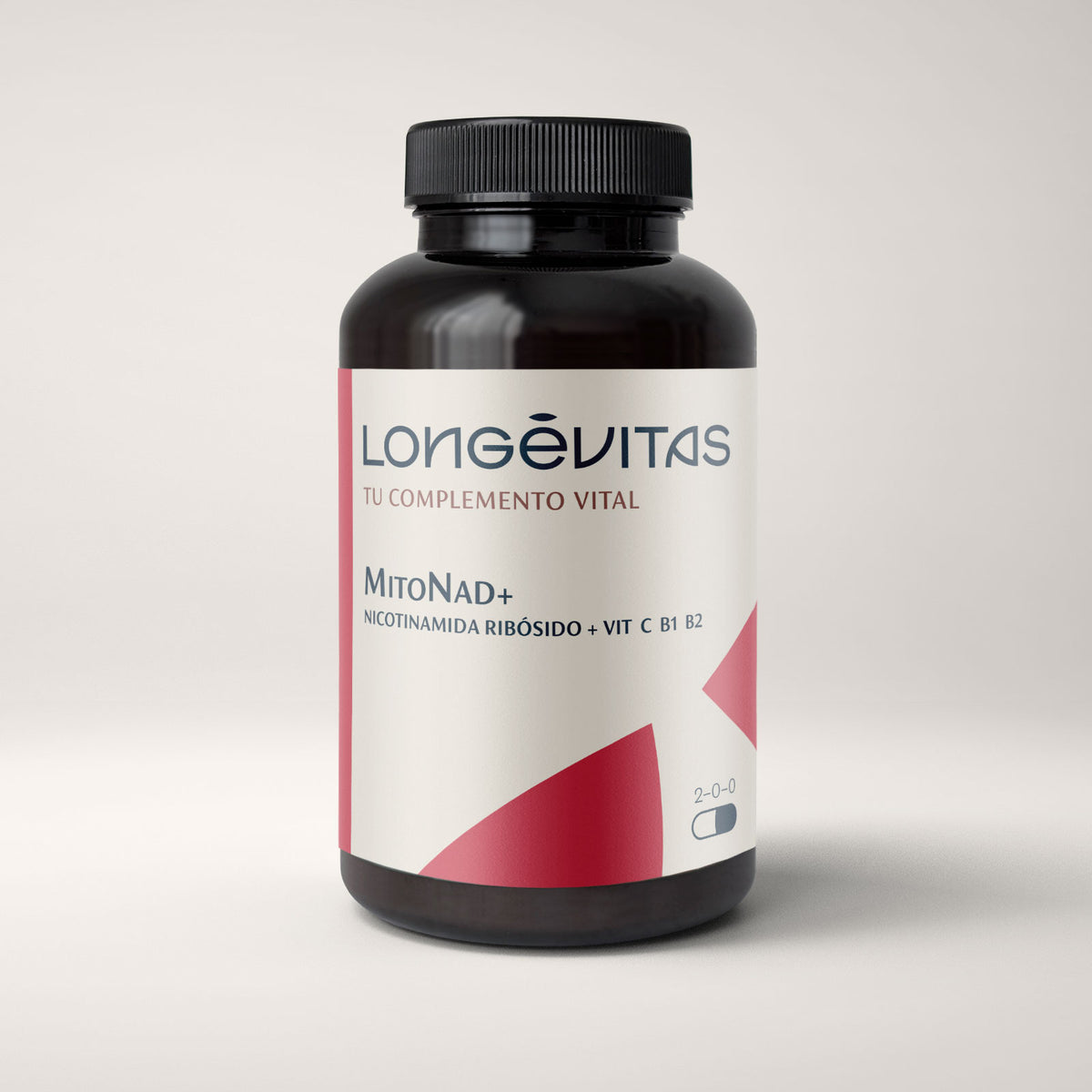
Its main ingredient is Nicotinamide Riboside Chloride (NR), a precursor the body can use to synthesize NAD+.
The formula is completed with:
- Vitamins B1 and B2: contribute to normal energy metabolism.
- Vitamin C: contributes to reducing tiredness and fatigue and protecting cells from oxidative damage.
MitoNAD+ comes in a format of 60 capsules, with a dosage of two capsules daily.
Although the study published in GeroScience did not evaluate MitoNAD+, both are related to the same field of research: the role of NAD+ in cellular metabolism and aging.
This scientific connection helps us better understand why NAD+ is sparking so much interest and why processes related to cellular energy play an important role in longevity research.
Healthy aging: caring for cellular energy and longevity
This study reminds us of something fundamental: aging is a complex process involving numerous mechanisms, from the functioning of our cells to our ability to stay physically active.
Although there is still much to discover about the relationship between NAD+ and frailty, research like this brings us closer to better understanding the processes related to functional aging.
And while science continues to advance, there is something we already know: maintaining muscle mass, exercising, eating well, and getting adequate rest are essential pillars of healthy aging.
Because longevity is not just about adding years.
It is about caring for our ability to continue enjoying them.
Source: Shida T. et al. (2026). Association between whole-blood NAD+ concentration and frailty in community-dwelling older adults: the Itabashi Longitudinal Study on Aging. GeroScience.
